HÖRST
Room volume when watching television
August 7, 2025
7 minutes reading time
OSKAR
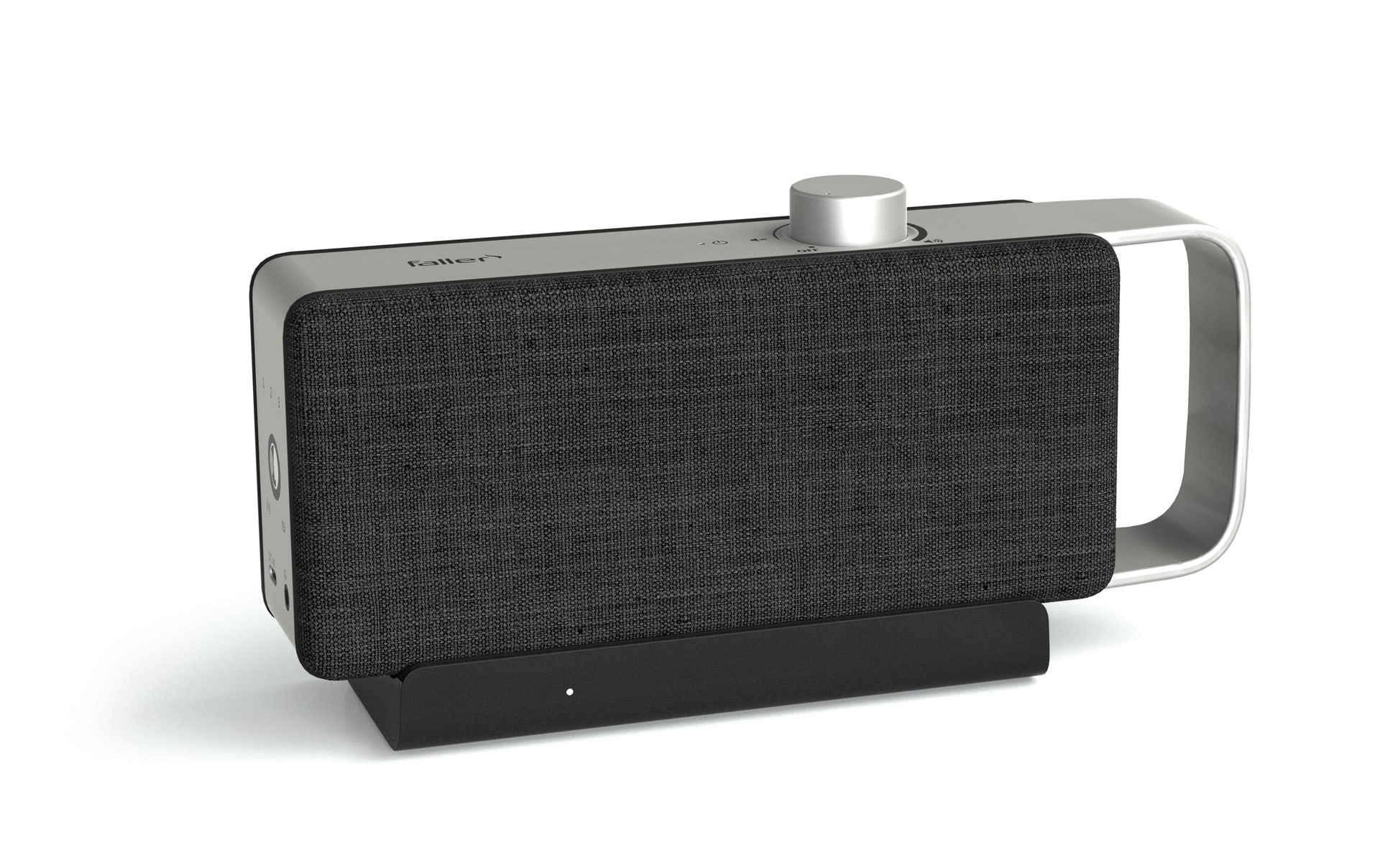
Portable TV voice amplifier
Advertisement
Table of contents
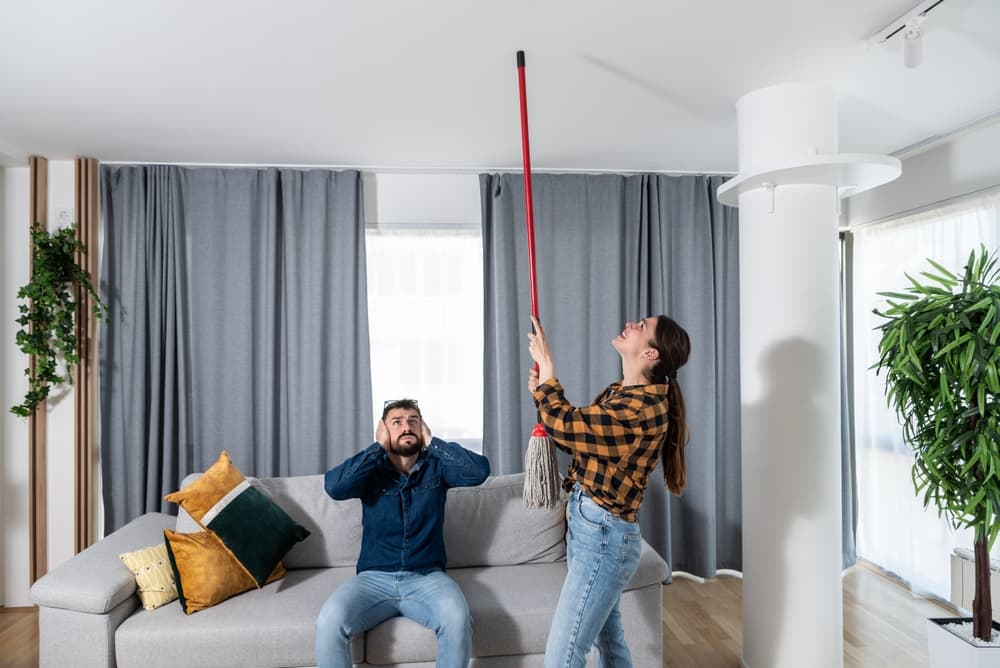
At a time when apartments are becoming increasingly densely packed and walls are often thinner, the issue of room volume is becoming increasingly relevant. Conflicts with neighbors can quickly arise, especially when watching television, an everyday pleasure. But what exactly is room volume? How loud can you set the TV without disturbing others? And what are the legal requirements? In this article, we get to the bottom of these questions and give you valuable tips on how to optimally adjust the room volume when watching TV in a noisy apartment.
What does "room volume" mean?
Room volume is a term that many people have heard before, but its exact definition is often unclear. Basically, room volume describes a volume at which sounds remain within a room and do not penetrate into neighboring rooms or apartments. This means that sounds should be audible but not disturbing when you are in another room.
Room volume in numbers – decibels as a measure
The question of exactly how loud room volume is can be answered by looking at decibel values. Decibel (dB) is the unit used to measure volume. Whispering is around 30 dB, while normal conversation ranges from 50 to 60 dB. Room volume is often described as a level of 30 to 40 dB.
A television set at room volume should therefore not be louder than 40 dB. But how do you measure this? There are various apps and devices that you can use to measure the volume in your room. It is important to remember that the volume you find comfortable may be considered noise pollution by others, especially in apartments with thin walls.
Volume when watching television
For many people, television is one of the main sources of evening entertainment. However, the volume that is considered comfortable when watching television can vary greatly depending on the program and personal preference. An action movie with loud sound effects requires a different volume setting than a quiet documentary.
The average TV volume ranges between 50 and 60 dB, which can be quite disturbing in a quiet environment. Especially in the evening hours, when the general ambient noise level drops, the TV sound can disturb neighbors or children sleeping in the next room, for example.
Room volume in apartments with thin walls
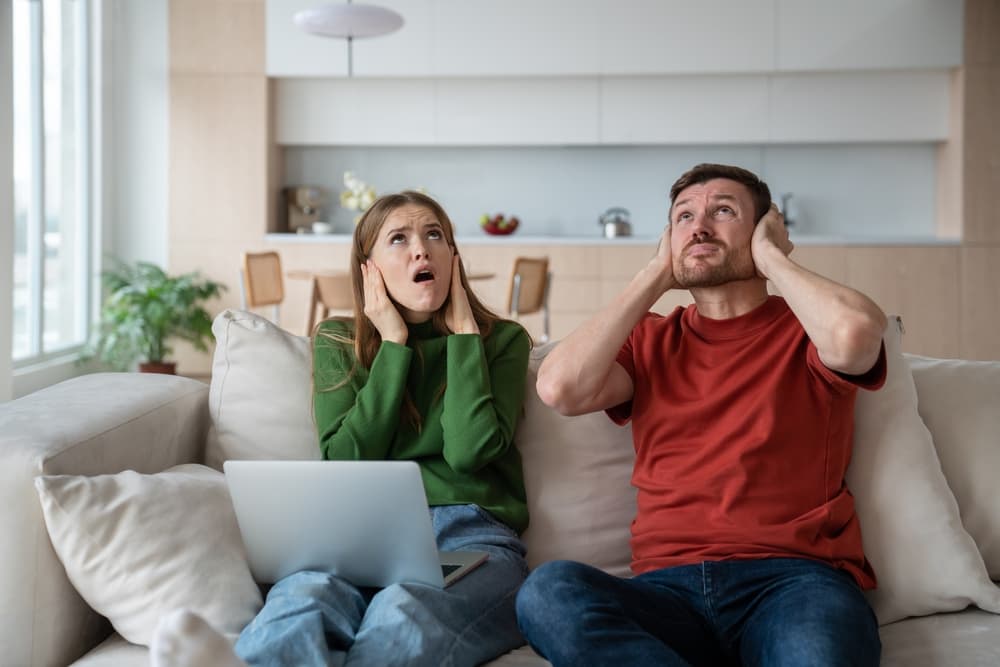
Apartments in multi-family buildings are often noisy, especially in older buildings where sound insulation does not meet modern standards. In such apartments, sound can easily be transmitted from one room to another, which means that noises originating in one room can also be clearly heard in other rooms.
Noisy apartments therefore pose a particular challenge when it comes to keeping noise levels down. Even at moderate volumes, sound can penetrate walls and floors and disturb your neighbors' peace and quiet. This becomes particularly critical when the noise occurs during legally prescribed quiet hours.In apartments with thin walls, it is therefore particularly important to pay attention to the volume of conversations, music, and the television and, if necessary, take measures to dampen the sound. These include carpets, curtains, or special soundproofing mats that keep the sound in the room and prevent it from reaching the neighbors. Another great way to watch TV without disturbing your neighbors or sleeping children is the OSKAR TV sound amplifier from faller audio, which we would like to introduce to you in more detail below.
Legal aspects and house rules regarding room volume
Many rental agreements and house rules contain clear regulations on noise levels and quiet hours. These rules serve to protect tenants and ensure that all residents in an apartment building or residential complex can live in peace.
Nighttime rest and quiet hours
In most regions, the legally prescribed nighttime quiet hours are from 10:00 p.m. to 6:00 a.m. During this time, noise must be reduced to room volume. The television should also be turned down during the afternoon quiet hours, which are often between 1:00 p.m. and 3:00 p.m.
Violations of these quiet hours may be considered a disturbance of the peace and result in legal consequences. Especially if the volume of the television regularly exceeds the room volume, neighbors may complain to the landlord or even take legal action.
Possible consequences of exceeding the room volume limit
If the volume in your room is constantly above a reasonable level, this can not only lead to tension with your neighbors, but also have legal consequences. Possible consequences include warnings from your landlord or even rent reductions by the neighbors affected. In extreme cases, repeated disturbances of the peace can lead to the termination of your lease.
To avoid such problems, it is important to check the volume of your TV regularly and ensure that it remains within acceptable limits. If you are unsure whether the volume is still within an acceptable range, it may be helpful to talk to your neighbors.
How to set the optimal volume for watching television
Finding the right volume when watching television is not always easy. However, there are a few tips and technical aids that can help you adjust the volume optimally and avoid noise pollution.
Technical aids and tips
One easy way to control the volume is to use headphones. Wireless models in particular now offer excellent sound quality and prevent the sound from disturbing others. However, they have the disadvantage of making communication and watching TV together more difficult.
Another helpful tool is soundproofing mats or panels, which can be placed behind the TV or on the walls. These mats absorb sound and prevent it from penetrating into other rooms. Carpets and curtains can also help to keep sound within the room.
The OSKAR TV audio amplifier from faller audio also offers a particularly simple solution.
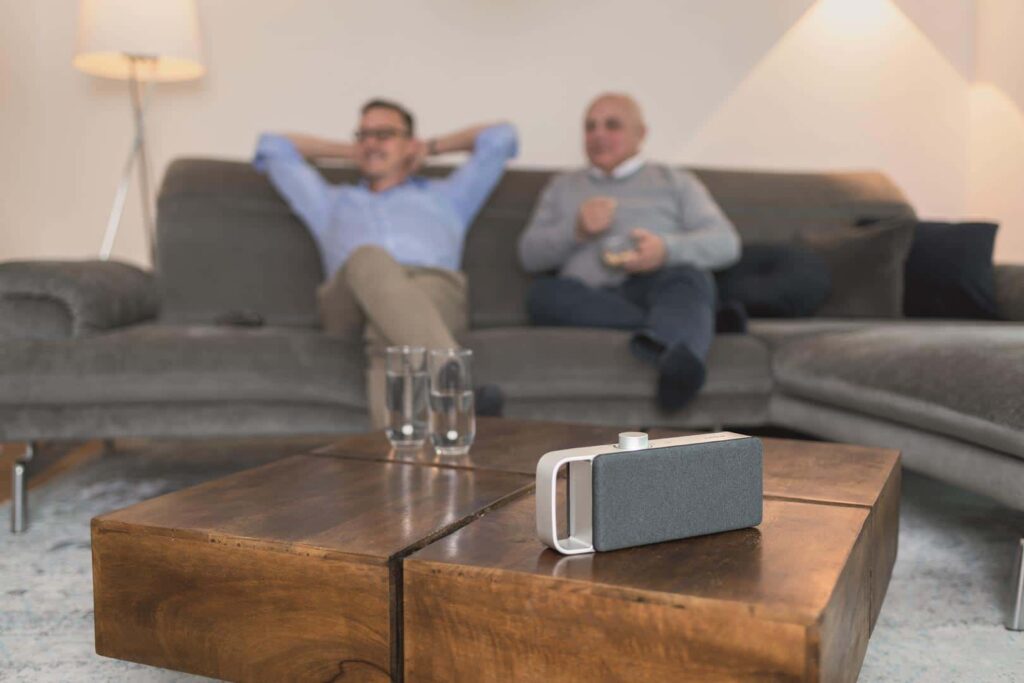
The OSKAR TV audio amplifier from Faller Audio
The OSKAR TV audio amplifier from faller audio is a portable TV speaker. It connects easily to your TV and transmits sound wirelessly to the device. You can adjust the volume individually. And thanks to innovative Clearvoice Technology, it also highlights voices on TV and easily filters out distracting background noise. This ensures that you can hear everything clearly without disturbing your neighbors.
This makes OSKAR an excellent solution, especially in apartments with thin walls, for controlling the volume in the room while enjoying an optimal listening experience.
Dealing with neighbors: Communication and consideration
In addition to technical solutions, treating your neighbors with respect is also crucial to avoiding conflicts. If you know that your apartment has thin walls, you should talk to your neighbors early on and find a solution together.
How to avoid conflicts
An open conversation can help avoid misunderstandings and ensure that all parties feel comfortable. If you feel disturbed by the volume of the television, offer to work with your neighbors to find a solution. Sometimes, simply reducing the volume a little or changing the position of the television in the room to better dampen the sound is enough.
Observing quiet hours and reducing the volume late at night can also help to ensure that everyone can live together harmoniously. And if you regularly use your TV in the evenings, you might want to consider purchasing a device such as the OSKAR TV hearing amplifier.
Further articles

Healthy candy alternatives for seniors
For many people, craving sweets is part of everyday life. However, traditional sweets often contain large amounts of sugar and provide

Cooking together in old age
As we get older, our everyday lives change in many ways. The children have left home, our partner may be

Protein-rich nutrition in old age
As we age, our bodies change in many ways, and nutrition plays a crucial role in our health.